What Is Real-Time Drilling Data and Why Does It Matter?
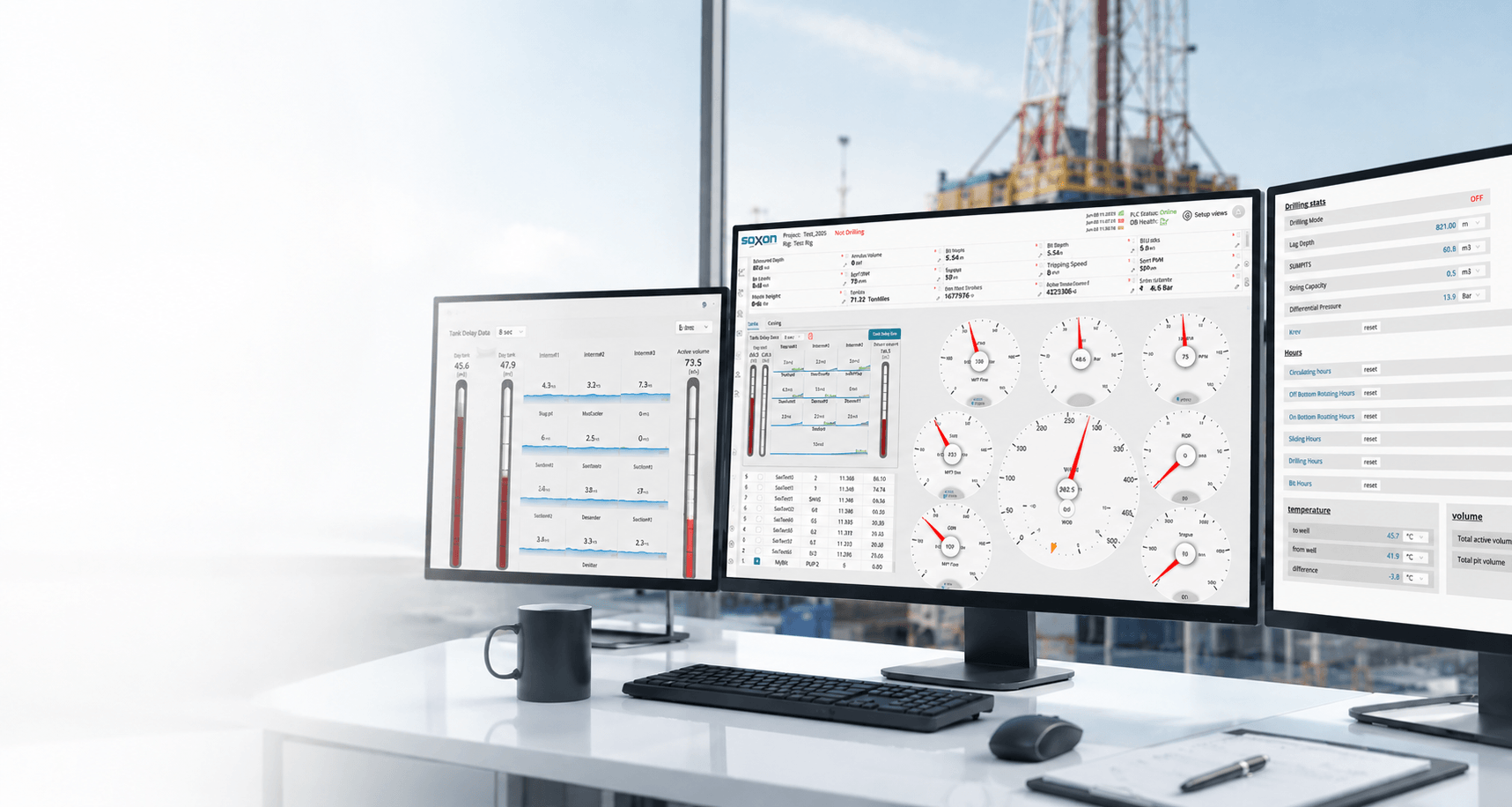
Drilling operations generate a constant flow of information, such as depth changes, hookload changes, pressure rises and falls, pumps start and stop, and the bit moves on and off bottom.
As a result, the drilling system collects and displays this information as the operation happens, creating real-time drilling data.
For drilling teams, the value is not simply having more data. The value comes from being able to see what is happening, understand changes as they occur, and give the right people access to the same operational picture.
What is real-time drilling data?
Real-time drilling data is operational information collected from the rig and made available shortly after it is generated.
The data normally comes from sensors, instrumentation, control systems, and other equipment around the rig. Typical parameters can include:
- Hole depth
- Bit depth
- Hookload
- Weight on bit (WOB)
- Rotary speed (RPM)
- Torque
- Standpipe pressure
- Pump strokes
- Flow rate
- Pit or tank volumes
- Rate of penetration (ROP)
- Differential pressure
- Mud properties
- Drilling status
- Directional drilling information
Some parameters are measured directly by sensors, other are calculated from the available data, and together, these values create a continuously updated view of the drilling operation.
How is drilling data collected?
A simplified drilling data flow can look like this:
Rig sensors → Data acquisition → Processing → Drilling software → Local and remote users
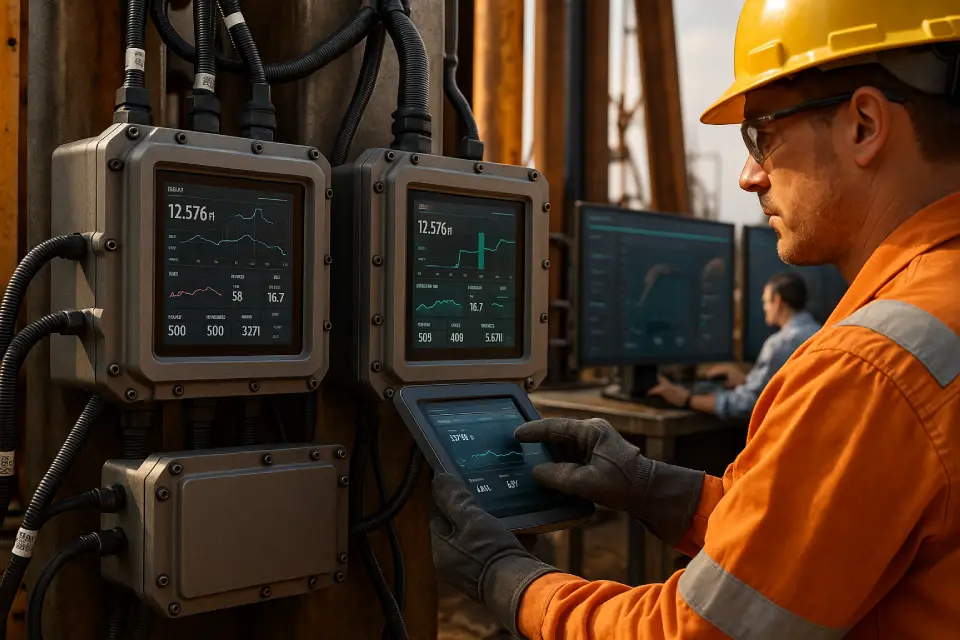
Sensors measure physical conditions such as pressure, load, rotation, flow, volume, and position.
At the same time, the drilling data system then processes these signals and presents the information in a format that drillers, engineers, supervisors, and other personnel can use.
An Electronic Drilling Recorder (EDR) is commonly used to collect, display, and store this information.
Modern EDR systems can provide live parameter displays, historical trends, calculated values, alarms, reporting, and remote access.
With Drilliphant, yoou can turn raw rig signals into information that drilling teams can understand and use.
Why does real-time drilling data matter?
The main advantage is visibility.
A drilling operation changes continuously, and individual parameters rarely tell the complete story. For example, changes in WOB, torque, RPM, standpipe pressure, and ROP may become much more meaningful when viewed together.
Real-time monitoring allows teams to follow these changes while the operation is happening, rather than only reviewing them later.
In general, this can support:
Better operational awareness
Teams can see the current condition of the operation and follow important drilling parameters as they change.
Faster recognition of changes
Unexpected trends or values can become visible sooner, giving experienced personnel better information to assess what is happening.
Better communication
When rig personnel, drilling engineers, and office-based teams can access the same information, discussions start from a shared operational picture.
Improved reporting
When drilling data is already stored digitally, it can also support automated or semi-automated reporting and reduce repetitive manual data handling.
For a more detailed explanation, read our guide to the Electronic Drilling Recorder.
Real-time data is more than a dashboard
A drilling dashboard is only the visible part of the system, behind it, the software must receive, organize, process, store, and present the data correctly. It may also calculate additional parameters, manage historical information, generate reports, provide alarms, and exchange data with other systems.
This is why real-time drilling monitoring and drilling data management are closely connected. In truth, a clear dashboard is useful only when the information behind it is reliable and properly structured.
Remote access changes how drilling teams work
Remote access allows people in different locations to see the same operational information without depending entirely on phone calls, screenshots, spreadsheets, or manually prepared updates.
Who can use real-time drilling data remotely?
Real-time drilling data does not have to stay at the rig. Authorized personnel can also access relevant drilling information remotely.
Because of this, there is a much clearer connection between the rig and the office.
Real-time and historical data work together
Real-time data answers: What is happening now?
Historical data helps answer: What happened before?
What happens to the data after it is recorded?
Once drilling data is stored, different teams can use it, for example,
- Drilling engineers
- Operations managers
- Client representatives
- Technical specialists
- Management teams
The data being monitored today becomes the historical information used for future analysis.
From drilling data to operational understanding
Modern drilling software should do more than simply display numbers.
The real objective is to turn raw rig data into information that is easier to understand and use.
Drilliphant brings live drilling data, historical trends, calculations, reporting, alarms, and remote access together in one connected environment.
The goal is simple:
See the rig. Understand the operation. Act with confidence.
Request a Demo
Learn more about Drilliphant drilling software and how real-time drilling data can help create a clearer operational picture.